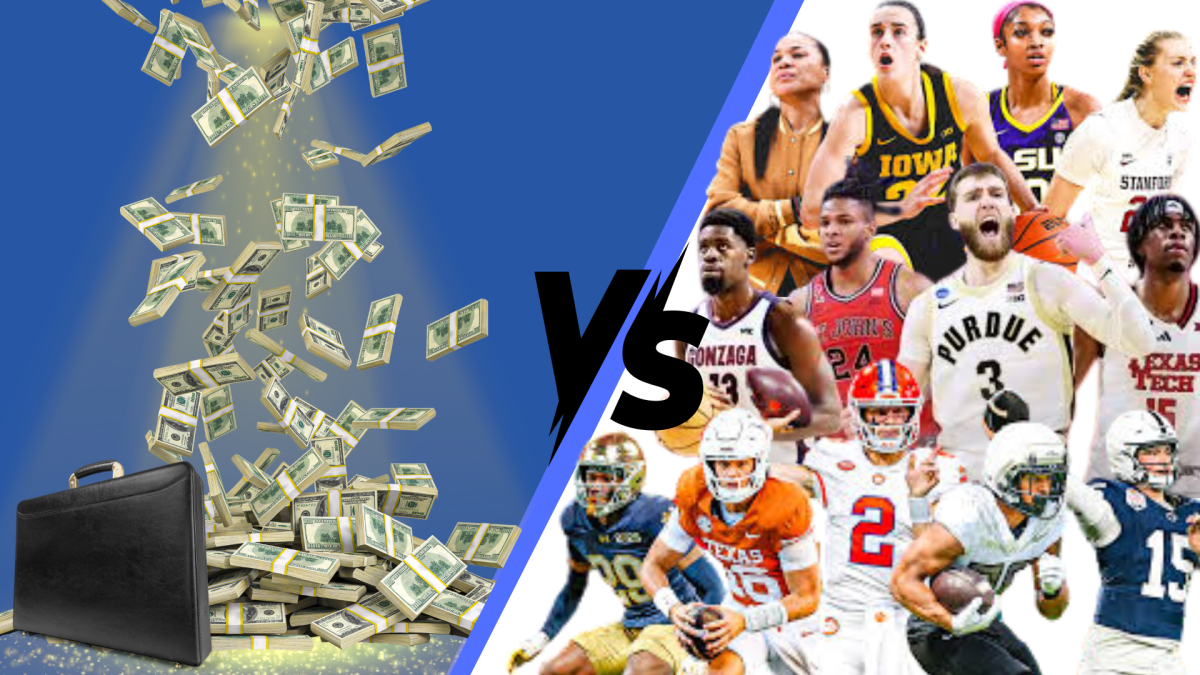








Since the NCAA approved Name, Image, and Likeness (NIL) rights in 2021, athletes in college have signed over 12,000 NIL deals totaling nearly $88 million, showing how quickly college sports have changed. What was once banned is now a major part of college athletics.
Before NIL rules were put in place, college athletes were not allowed to profit from their own name or image, even though colleges and athletic programs made millions of dollars. The new NCAA policy allows athletes to earn money through sponsorships, social media promotions, and brand partnerships, creating a fairer system.
Mount Vernon head coach Mark Webber believes NIL fixed a long-standing issue. “At its core, NIL restores a basic right by allowing athletes to earn money from their own name and image, something they were not allowed to do before despite the value they created,” Webber said. This change also helps reduce financial stress, allowing athletes to focus more on school and their sport instead of working extra jobs.
As NIL expanded, it also changed recruiting and roster management. “The transfer portal has become a second recruiting board, and roster management now requires constant re-recruitment of your own players,” Webber said. This has made recruiting faster and increased pressure on both athletes and coaches.
NIL deals also help athletes develop life skills outside of sports. Many athletes now learn branding, money management, and professional communication, which can help them after college.
Former football player Todd Burson, who played three years at Ohio Westland, believes compensation is simple fairness. “If a company wants to use someone’s name, image, or likeness to generate a profit, then the athlete supplying that material should be compensated,” Burson said. His experience shows NIL benefits athletes even if they never play professionally.
Overall, NIL deals have changed college athletics by promoting fairness and preparing athletes for the future. By reducing financial pressure and teaching real-world skills, NIL has become an important and lasting part of college sports.